
Destination Storytelling for the Modern DMO
Every destination leader eventually has to answer the same essential question: What makes this place different?
It’s a foundational question. It shapes the brand, informs the creative platform, guides the visitor experience, and gives marketers something to build around. But in today’s travel landscape, it’s no longer enough.
The stronger, more enduring question is this: Why should someone care?
That’s where destination storytelling becomes more than just creating content. It becomes a strategic discipline. Campaigns can capture attention, introduce an idea, and inspire action. But stories create the depth, context, and emotional connection that help people understand why a place matters.
For modern DMOs, the opportunity isn’t simply to produce more content. It’s to build a connected body of stories that strengthens the brand over time and helps the destination become known for something distinct = it’s meaning.
Brand, Identity, and Campaign Are Not the Same
Your destination brand is your essence. It’s what your destination feels like, it’s your soul, it’s what’s ownable and what separates you from every other place competing for attention.
Your identity is the visual and verbal expression of that essence.
Your campaign is the activation of both.
We believe the strongest destination brands fall into four distinct classifications: Authentic, Evocative, Indulgent, or Unexpected. While there are similarities within each classification, they’re most easily defined as follows:
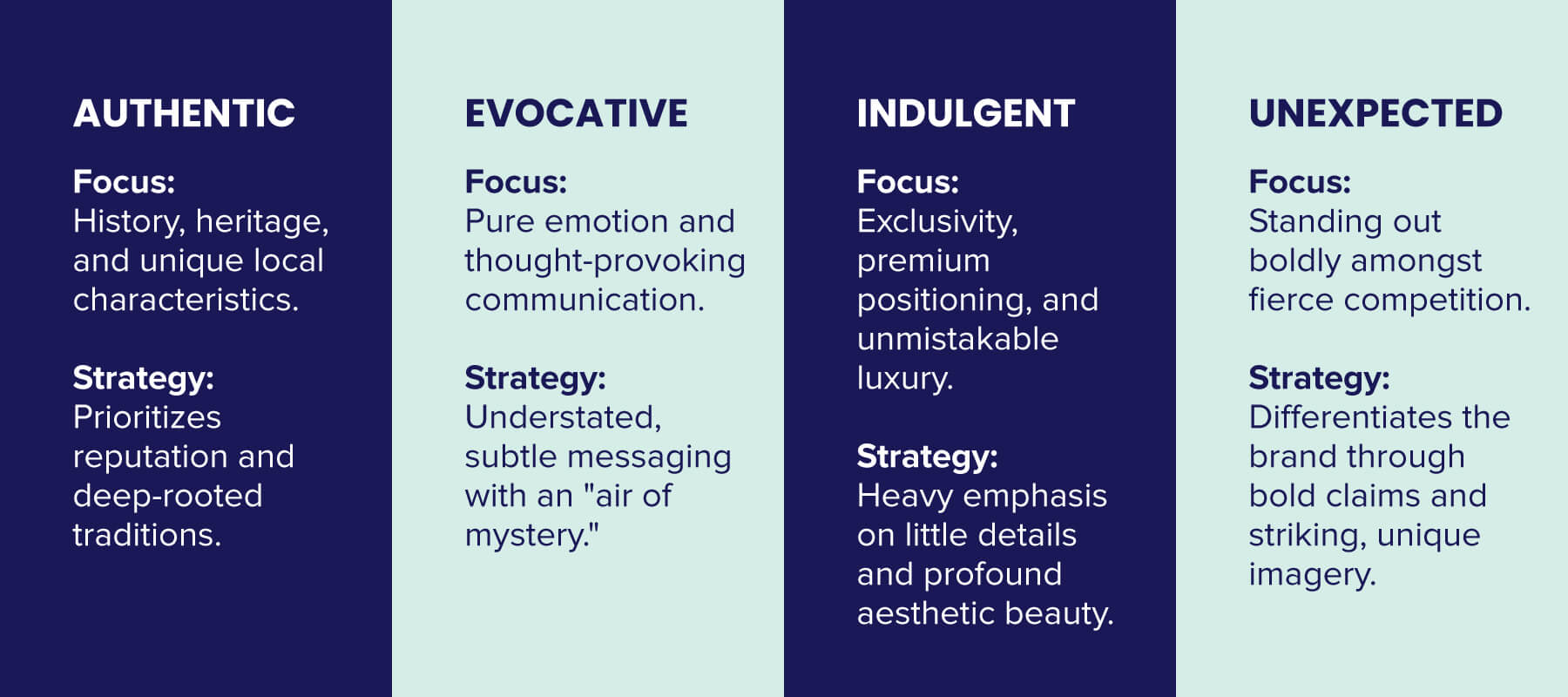
The challenge isn’t just identifying which one of these classifications describes your destination. It’s identifying which one you, your partners, and your community is most comfortable with.
Once that foundation is clear, storytelling becomes more instinctive. It gives the brand somewhere to go beyond the campaign headline. It allows the destination to reveal itself through people, places, traditions, experiences, and ideas that make the positioning feel real.
Campaigns Matter, But They Can’t Do It All
Advertising campaigns are essential. They create attention and awareness. They spark interest. They’re an invitation.
But campaigns were never designed to carry the full weight of a destination’s story.
That’s not a flaw in the campaign. It’s a recognition of what campaigns are built to do. A campaign needs focus. It needs clarity. It needs a strong conceptual idea that can work across media, audiences, and channels. And by nature, it has to simplify. [Take a look at some of our favorite campaigns here.]
Destinations, however, aren’t simple.
They are made up of complex histories, neighborhoods, landscapes, local businesses, cultural traditions, personalities, tensions, rituals, and moments that can’t all fit inside a single campaign message.
That’s where storytelling adds value. It expands the campaign idea without diluting it. It gives the brand promise more dimension. It creates proof points that help audiences see the destination not just as a place to visit, but a place with character, depth, and meaning.
From Campaign Message to Brand Meaning
The most meaningful destination stories are often found behind the campaign, not within it.
A local chef preserving generations of family recipes. An artist whose lifelong work is shaped by the destination’s landscape. A fishing guide who has spent decades on the water. A photographer helping preserve the night sky. A small business owner who has become part of a neighborhood’s rhythm. A quirky tradition that residents have protected, adapted, and passed forward.
These stories may never become campaign headlines, but they often represent the very things visitors remember most. They give the campaign credibility. They strengthen the destination’s positioning. They give journalists, creators, and partners something richer to share. They even help residents see themselves in the brand. And most importantly, they provide proof that the destination’s brand promise is not just an advertising construct; it’s rooted in something real.
A Framework for Building Meaning
At Paradise, we have come to think about destination storytelling through a simple framework:
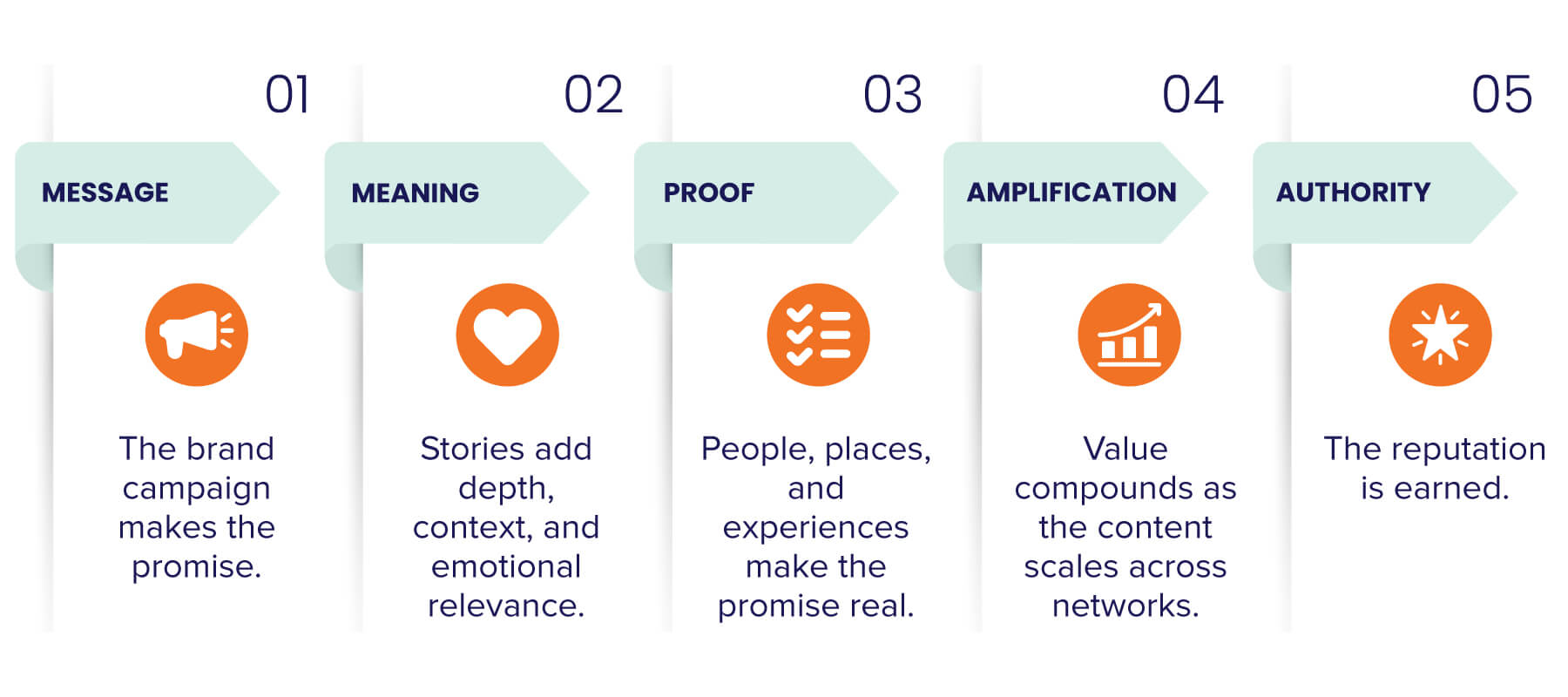
That’s how destination meaning grows. Not through a single campaign, but through an ecosystem of interconnected stories that continually expand what people know, feel, and remember about a place.
Building a Living Archive
The value of storytelling content goes far beyond an asset library. Advertising campaigns come and go. Stories accumulate.
Every interview conducted, article published, film produced, and photograph captured adds up to something larger than a collection of content. Over time, it becomes a living archive: a record of the people, traditions, businesses, and experiences that make a destination unique.
Long after a campaign has been retired, that archive keeps working. Future campaigns can draw from it. Journalists can reference it. Visitors can discover it. Residents can recognize themselves in it. Partners can expand on it. Internal teams can use it to preserve institutional knowledge and shape future strategy.
For a DMO, that’s real long-term value. The best storytelling assets do more than serve the next post, article, or campaign cycle. They become part of the destination’s intellectual and emotional infrastructure.
Depth Over Volume
A content strategy should be measured by more than just asset output: more articles, more videos, more social content, more posts. Consistency matters, but meaningful destination storytelling is rarely a volume problem. More often, it’s a depth problem.
The stories people remember reveal something specific. They introduce audiences to the people, traditions, landscapes, and experiences that give a place its character. They help a destination feel less interchangeable and give travelers a reason to care.
One strong storytelling effort can generate a documentary short, a written feature, photography assets, social content, media opportunities, stakeholder materials, and future campaign inspiration. Each asset reinforces the others. Each one gives the brand more dimension.
That is where the real value lives.
Some of the stories we’re most proud of were not necessarily the most successful on launch day. They were the stories that continued to deliver months later through media coverage, community conversations, visitor recommendations, partner use, and earned exposure.
That’s often when the story has moved beyond content and become part of the destination’s narrative.
Why Meaning Matters More Than Ever
The rise of AI isn’t changing the importance of storytelling. In fact, it’s demanding more of it.
Search engines, recommendation platforms, media outlets, and AI models all rely on information to interpret a destination. The richer, more original, structured, and connected that information becomes, the easier it is for others to recognize what makes a place unique.
In many ways, AI is rewarding something destination marketers should’ve been doing all along: creating original stories, documenting local expertise, preserving cultural context, and building a body of knowledge around their destination.
In this new era of AI-assisted discovery and planning, the DMO website becomes more important, not less. As more dreaming and discovery happen through AI tools, social feeds, creator content, and video platforms, travelers who reach a destination’s official site often arrive with clearer intent.
When a traveler asks an AI tool where to go or what to do, the answer it gives is only as good as what’s been published about your destination. AI draws from across the internet—your website, social channels, travel reviews, videos, third-party articles—to form its understanding of a place. The destinations that show up in those responses aren’t there by accident. They’ve built a body of content substantial enough to be recognized.
The Future Belongs to Connected Brands
The strongest destination brands aren’t the ones producing the most content. They’re the ones creating the clearest sense of who they are and why they matter. Yes, that requires creating and executing memorable advertising campaigns. But just as important, it requires curating meaningful stories. It requires content ecosystems that connect people, places, and experiences over time.
But to get there, it requires asking harder questions.
What do we want our destination to be known for? What brand pillar are we building meaning around? Are our stories connected, or do they exist in isolation? Are we simply filling channels, or are we building long-term brand value?
Those questions matter because destination marketing isn’t just about generating attention. It’s about creating recognition and helping audiences, residents, partners, and travelers see the destination with more clarity and connection.
Meaning Is the Measure
After years of producing destination brands, campaigns, and content, we’ve come to believe that some of the most valuable work we do isn’t measured by impressions, clicks, or engagement.
It’s measured in meaning.
Every interview, article, post, photograph, and film contributes to a larger story about a place. Individually, they seem small. Together, they become something much more valuable: a body of knowledge that helps people—and machines—understand what makes a destination worth experiencing.
Campaigns create attention.
Stories create the meaning that lasts.